
Introduction
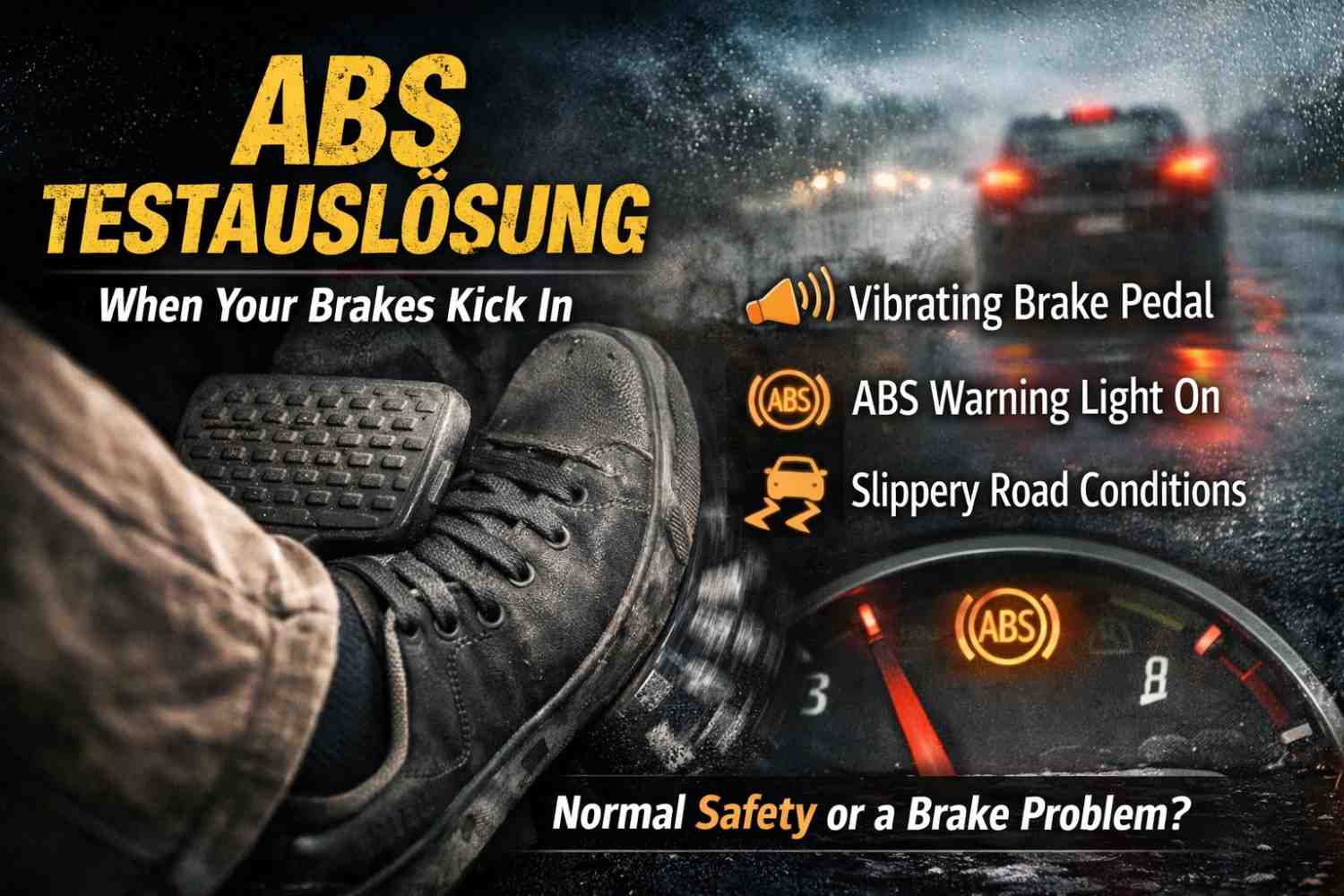
You’re driving in the rain, traffic slows suddenly, and you hit the brakes a bit harder than usual. Instead of a smooth stop, the pedal starts shaking under your foot. It feels strange, almost like something is wrong. That moment is what many drivers refer to as ABS Testauslösung, and it can catch you off guard if you don’t know what’s happening.
What ABS Testauslösung Means
ABS Testauslösung simply means the activation or self-triggering of the Anti-lock Braking System (ABS), where the system rapidly pulses the brakes to prevent the wheels from locking during braking.
In normal terms, it’s your car trying to keep control when the tires are about to lose grip. Instead of locking the wheels, the ABS system releases and reapplies brake pressure very quickly. You don’t see it, but you definitely feel it through the brake pedal.
What It Feels Like While Driving
The first time it happens, most people think something broke. The brake pedal starts vibrating or pulsing, sometimes with a slight grinding or buzzing sound. It can feel rough, not smooth like normal braking.
I’ve had customers come in saying, My brakes are failing, when in reality, the system was doing exactly what it should. That brake pedal vibration is actually a sign that the ABS system is working to keep you from skidding.
It’s especially noticeable on wet roads, gravel, or when you brake hard at higher speeds.
Why ABS Gets Activated
ABS kicks in when your wheels are about to lock up. This usually happens when there’s not enough traction between the tires and the road.
Rain is the most common situation. You press the brakes, but the tires can’t grip properly. Instead of sliding forward uncontrollably, the ABS system steps in and controls the braking force.
Snow, mud, or loose gravel can trigger it even faster. Even dry roads can activate it if you slam the brakes suddenly in an emergency.
The system constantly monitors wheel speed. The moment it detects uneven rotation, it reacts instantly.
When ABS Activation Is Completely Fine
Most of the time, ABS Testauslösung is completely normal.
If it happens during hard braking, especially in slippery conditions, that’s exactly when you want it. It’s doing its job, helping you steer while braking instead of sliding straight ahead.
I’ve seen drivers panic and release the brake when they feel the vibration. That’s actually the wrong move. You should keep steady pressure on the pedal and let the system work.
If it only happens occasionally during tough braking situations, there’s nothing to worry about.
Signs Something Isn’t Right With Your Brakes
Things change if it starts happening when it shouldn’t.
If you’re braking lightly on a dry road and still feel that pulsing, something might be off. It could be a dirty wheel speed sensor, uneven brake components, or even a fault in the ABS system itself.
Another red flag is the ABS warning light. If that light stays on, the system may be disabled, meaning you won’t have that extra control when you need it.
In some cases, drivers confuse normal ABS activation with a braking problem like worn brake pads or warped discs. The key difference is when and how often it happens.
How to Fix ABS Issues
If something feels off, don’t ignore it.
Start with a basic inspection. A mechanic will usually check the ABS sensors first because they’re exposed to dirt and debris. I’ve cleaned sensors on cars that instantly fixed the issue.
Sometimes it’s electrical, like a faulty connection or a damaged sensor cable. Other times, it’s mechanical, like uneven brake wear causing inconsistent braking behavior.
If the ABS warning light is on, a diagnostic scan is the fastest way to pinpoint the problem. Modern cars store error codes that make troubleshooting much easier.
What You Should Do When ABS Kicks In
When you feel that vibration, stay calm and keep your foot on the brake.
Don’t pump the pedal. That’s old-school driving from before ABS systems existed. Your car is already doing the pumping faster than you ever could.
Focus on steering. That’s one of the biggest advantages of ABS. Even during hard braking, you can still control the direction of the car.
In real-world driving, this can mean the difference between stopping safely and sliding into something.
Conclusion
Once you understand it, ABS Testauslösung stops being scary and starts making sense. That vibration you feel isn’t a failure; it’s your car helping you stay in control when things get risky.
From experience, the biggest mistake drivers make is panicking when it happens. Stay steady, keep braking, and let the system do its job.
If it happens only during hard braking, you’re good. If it starts happening randomly or you see an ABS warning light, then it’s time to get it checked.
At the end of the day, ABS isn’t just a feature. It’s one of those things that quietly saves you when the road throws something unexpected your way.
Frequently Asked Questions About ABS Testauslösung
Why does my brake pedal vibrate during ABS Testauslösung?
That vibration comes from the ABS system rapidly applying and releasing brake pressure. It feels rough, but it’s actually helping your tires keep grip instead of locking up.
Is ABS Testauslösung dangerous while driving?
No, it’s not dangerous at all. In fact, it’s one of the safest features in your car. It helps you stay in control during hard braking, especially on wet or slippery roads.
Why does ABS activate even when I brake lightly?
If ABS kicks in during light braking on a dry road, that’s not normal. It could mean a sensor issue, uneven brake wear, or something wrong with the ABS system that needs checking.
Can I still drive if the ABS warning light is on?
Yes, the car will still brake, but without ABS support. That means higher chances of wheel lock in emergencies. It’s safe for short drives, but you should get it checked soon.
Should I pump the brakes when ABS activates?
No, don’t pump the brakes. Just press the pedal firmly and let the system do its job. ABS is already reacting faster than any driver can.

