
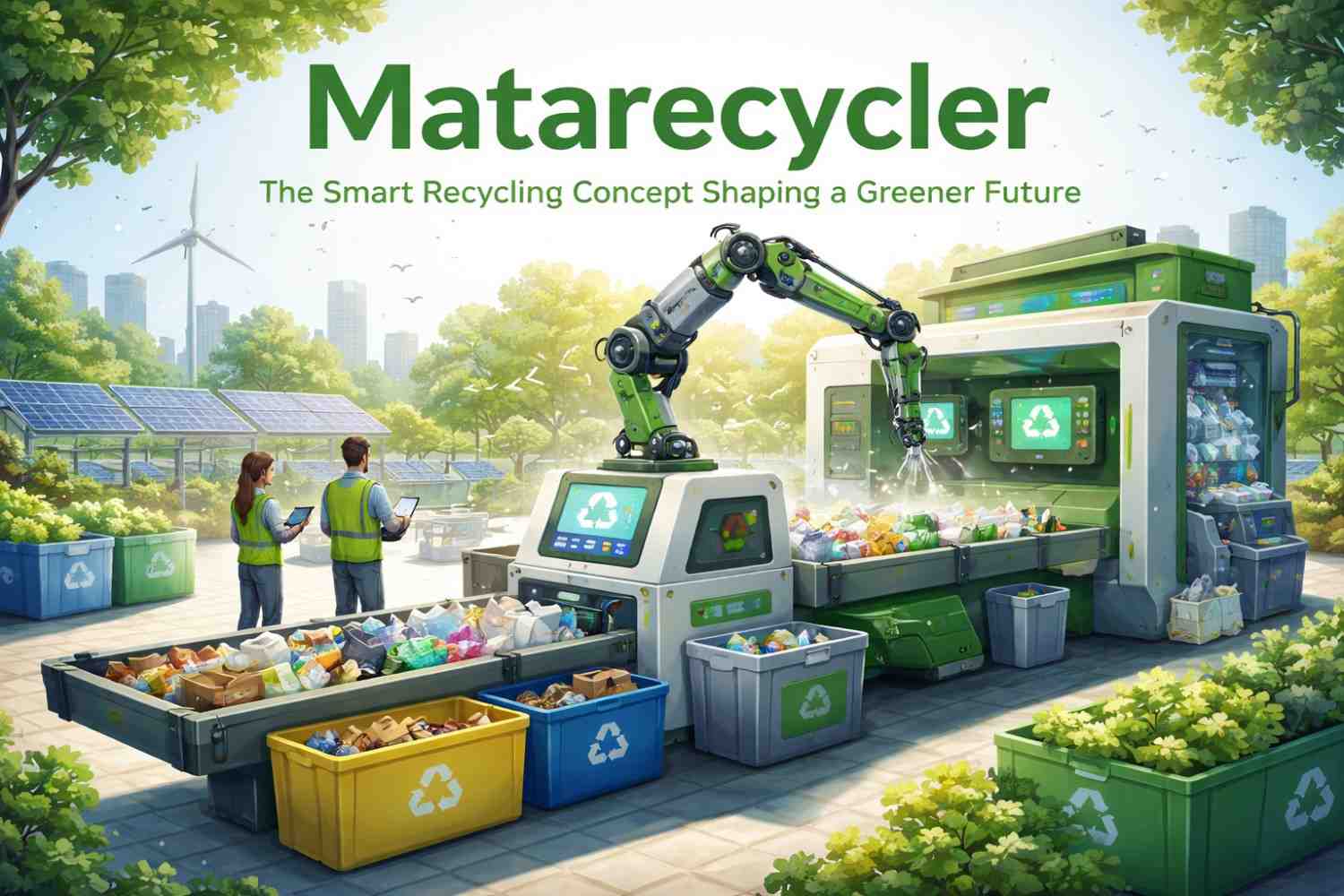
The world is facing a growing waste problem as urban populations expand and consumption patterns continue to rise. From plastic packaging to electronic components, discarded materials are accumulating at a pace that traditional recycling systems often struggle to manage. In this context, new ideas and technological approaches are beginning to reshape how societies think about waste and resource recovery. One term that has recently appeared in online discussions is Matarecycler, a concept that represents a modern approach to recycling and sustainability. Understanding what this idea stands for offers a glimpse into how environmental challenges are being addressed through innovation and smarter systems.
Understanding the Meaning of Matarecycler
Matarecycler is commonly used to describe a modern recycling concept that blends environmental awareness with technological efficiency. Rather than referring to a single machine or product, the term is often associated with a broader approach to waste management that focuses on smarter processing, material recovery, and reduced environmental impact. It represents a shift away from outdated, labor-intensive recycling methods toward automated and data-driven systems that can sort and process materials more accurately.
In many discussions, Matarecycler is presented as a symbol of next-generation recycling solutions. It reflects the idea that waste should not simply be discarded or buried in landfills, but treated as a valuable resource that can be reintegrated into production cycles. This perspective aligns with the principles of the circular economy, where materials are reused and repurposed instead of being thrown away after a single use.
The Idea Behind the Concept
At the heart of Matarecycler lies the belief that recycling must evolve alongside modern consumption patterns. Traditional systems were designed for simpler waste streams, often limited to paper, glass, and certain metals. Today’s waste, however, includes complex plastics, mixed materials, and electronic components that require more advanced handling.
The concept emphasizes efficiency, accuracy, and sustainability. It encourages the use of automated sorting technologies, intelligent material recognition, and optimized recycling processes that reduce energy use. By improving the way materials are separated and processed, this environmental solution aims to recover a higher percentage of usable resources while minimizing contamination.
Another important element behind the idea is accessibility. Modern recycling approaches are increasingly designed to be integrated into urban environments, businesses, and even homes. The goal is to make recycling easier for individuals while improving the overall efficiency of waste management systems.
How Recycling Technologies Are Evolving
Recycling has changed significantly over the past few decades. What once relied heavily on manual sorting is now supported by sophisticated machines capable of identifying materials using sensors, cameras, and artificial intelligence. These systems can recognize different types of plastics, metals, and paper with remarkable precision, allowing facilities to process waste more effectively.
The evolution of recycling technology is driven by both environmental necessity and economic opportunity. As natural resources become more limited and expensive to extract, recycled materials are gaining value. Advanced recycling systems are designed to capture that value by producing higher-quality recovered materials that can be used in manufacturing.
Matarecycler is often linked to this technological shift. It represents a new generation of recycling approaches that combine automation, data analysis, and smart design. These systems aim to reduce waste, conserve resources, and create a more sustainable relationship between production and disposal.
Why Solutions Like Matarecycler Matter
The importance of modern recycling concepts becomes clear when considering the scale of the global waste problem. Millions of tons of plastic enter oceans each year, and landfills continue to expand in many parts of the world. Traditional waste management methods are no longer sufficient to handle the volume and complexity of modern materials.
Solutions inspired by Matarecycler address these challenges by focusing on efficiency and resource recovery. By improving sorting accuracy and processing methods, the system can reduce the amount of waste that ends up in landfills or incinerators. This not only helps protect ecosystems but also conserves valuable raw materials.
Public awareness is another reason such concepts are gaining attention. People are increasingly interested in sustainable products and responsible waste management. As environmental concerns grow, terms like Matarecycler attract interest because they represent progress and innovation in an area that affects everyone.
Environmental and Economic Benefits
One of the key advantages of advanced recycling approaches is their positive impact on the environment. By recovering more materials and reducing landfill use, the system helps decrease greenhouse gas emissions associated with waste decomposition and resource extraction. Recycling also requires less energy than producing new materials from raw resources, which further reduces environmental impact.
Economic benefits are equally important. Efficient recycling systems can create jobs, stimulate local industries, and reduce the costs associated with waste disposal. Recovered materials can be sold to manufacturers, creating a circular flow of resources that supports sustainable production.
Matarecycler embodies this balance between environmental responsibility and economic practicality. It highlights the idea that sustainability does not have to come at the expense of growth. Instead, it can drive innovation, create opportunities, and encourage smarter use of resources.
The Role of Innovation in Modern Recycling
Innovation is at the core of any meaningful change in recycling. New materials, packaging designs, and consumer products require equally advanced solutions for end-of-life processing. Without innovation, recycling systems would quickly become outdated and ineffective.
Modern recycling concepts focus on integrating technology into every stage of the process. Sensors can detect material composition, robotic arms can sort items with precision, and data systems can optimize the entire workflow. These innovations not only improve efficiency but also reduce human error and operational costs.
Matarecycler represents this forward-looking approach. It reflects the growing understanding that environmental challenges require technological solutions as well as behavioral changes. By combining smart systems with public awareness, the concept points toward a future where recycling is more efficient, accessible, and effective.
Conclusion
As the global waste crisis continues to grow, new ideas and technologies are becoming essential. Traditional recycling methods, while valuable, are no longer enough to handle the complexity and scale of modern waste streams. Concepts like Matarecycler illustrate how innovation can reshape the way societies manage resources and reduce environmental impact.
By focusing on efficiency, automation, and sustainability, this approach highlights the potential of modern recycling systems to transform waste into valuable materials. It reflects a broader shift toward circular thinking, where products and resources are designed to be reused rather than discarded. As awareness grows and technology advances, ideas associated with Matarecycler are likely to play an increasingly important role in building a cleaner and more sustainable future.

