
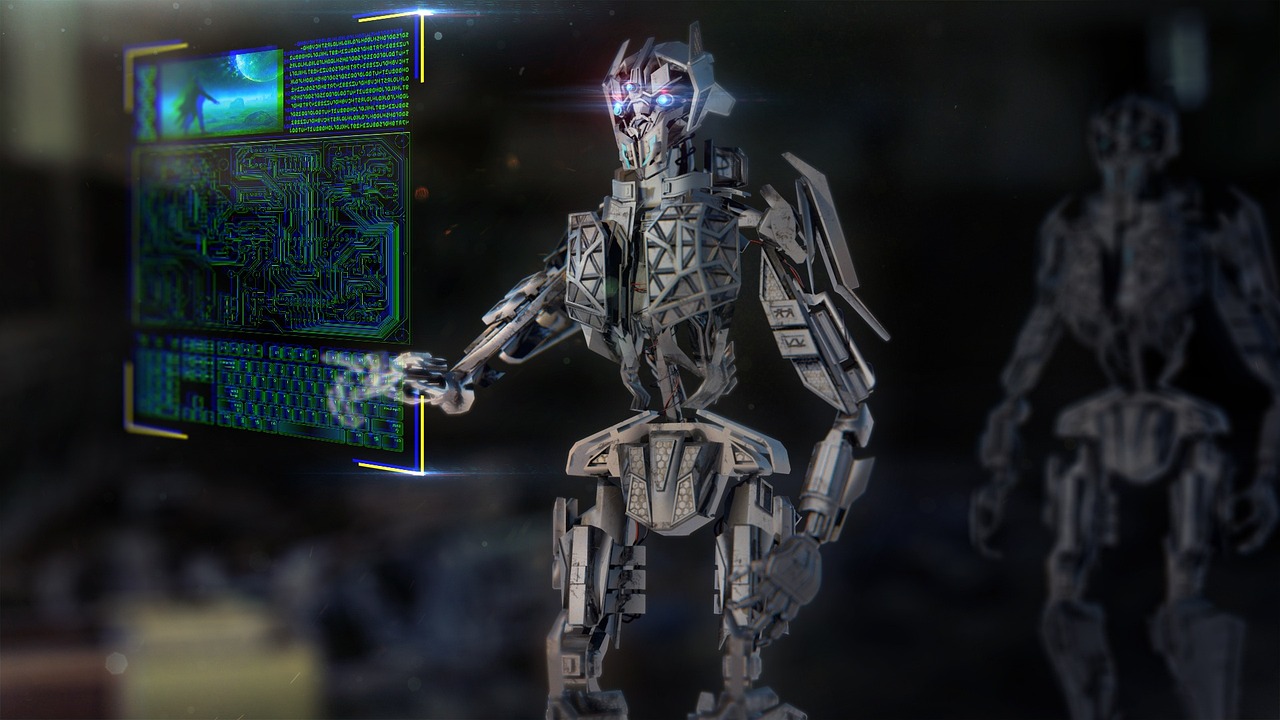
If you feel like the AI hype has reached a plateau lately, you aren’t alone. We’ve all spent the last two years marathon-testing prompts and trying to figure out why our super-intelligent assistant still hallucinates basic math. But 2026 is shaping up to be the year where the toy phase of AI ends and the tool phase actually begins. We are moving away from just generating text and toward systems that can actually do things.
People are searching for what’s next because the novelty of ChatGPT has worn off, and the business world is demanding real ROI. Based on the current trajectory of model training and the shift toward agentic workflows, here are the five massive breakthroughs that will actually move the needle in 2026.
Will AI Agents Finally Start Doing my Actual Work?
The biggest shift in 2026 isn’t a smarter chatbot; it’s the rise of Agentic AI. For a long time, we’ve used AI as a Co-pilot—you ask a question, it gives an answer. In 2026, we’re moving to Autopilot. These agents won’t just suggest a response to an email; they will login to your CRM, check inventory, coordinate with the shipping department’s AI, and resolve a customer’s refund without you ever touching a keyboard.
I’ve seen dozens of companies try to automate with basic LLMs and fail because the AI couldn’t chain tasks together. The breakthrough in 2026 is reliable multi-step reasoning. Instead of a single prompt, these systems use loops to check their own work. If a task fails, the agent tries a different path. This is the difference between a tool that helps and a digital employee that executes.
Can AI learn to Understand the World Beyond Just Text?
We’ve had multimodal models for a minute now, but they’ve mostly been hacks—sticking an image-recognizer onto a text-generator. By 2026, we will see Native Multimodal Intelligence as the standard. This means the AI doesn’t translate an image into text to understand it; it perceives pixels, sound waves, and data points simultaneously in a single thought process.
In a real-world setting, imagine an AI safety inspector on a construction site. It isn’t just looking at a photo; it’s processing a live video feed, hearing the specific frequency of a struggling motor, and reading the digital heat sensors in real-time. The mistake most people make is thinking multimodality is just about making AI see. It’s actually about contextual synthesis—giving the AI the common sense it currently lacks by letting it experience the world more like we do.
Is there a way to Run Powerful AI without a Massive Data Center?
The energy wall is real. We can’t keep building $100 billion data centers forever. The breakthrough I’m most excited about for 2026 is the commercialization of Neuromorphic Hardware and Edge-Native AI. This is a fancy way of saying we’re building chips that mimic the human brain’s efficiency. Instead of sending every request to a server in Virginia, your phone or laptop will handle massive reasoning tasks locally using a fraction of the power.
The benefit here isn’t just lower electricity bills. It’s privacy and latency. When the AI lives on your device, your data never leaves your hands. I’ve talked to many developers who are tired of the 2-second delay in cloud-based voice assistants. In 2026, on-device AI will feel instantaneous, making real-time translation and AR interfaces finally feel natural rather than clunky. You can see more about the hardware shift on NVIDIA’s official blog or check out OpenAI’s latest research on model efficiency.
How Will We Stop AI From Making Things Up in 2026?
We call it hallucination, but it’s really just a probability error. The 2026 breakthrough here is Self-Verifying Reasoning Loops. Right now, AI is a one-shot thinker; it says the first thing that comes to mind. New architectures coming next year involve a Critic model that runs alongside the Creator model.
Before the AI gives you an answer, it internally debates the logic and checks it against a trusted knowledge base (like your company’s internal docs or a verified database). This moves us away from the vibes-based accuracy we have now and toward deterministic reliability. If you’ve ever been burned by an AI citing a law that doesn’t exist or a code library that’s deprecated, this is the fix you’ve been waiting for.
Will 2026 Be the Year AI Gets Its Own ID Badge?
As we fill the internet with autonomous agents, we’re going to hit a massive trust wall. How do you know the agent reaching out to schedule a meeting is actually authorized by the person it claims to represent? In 2026, we expect a breakthrough in AI Governance and Identity Protocols.
We will start seeing Digital ID for AI agents—a cryptographic way to verify what an agent is allowed to do and who is responsible for it. Think of it like a corporate ID badge for software. This will be the boring but essential breakthrough that allows banks and healthcare providers to finally let AI handle sensitive transactions. Without this, agentic AI is just a security nightmare waiting to happen.
Summary of 2026 AI Breakthroughs
In short, 2026 is the year AI stops talking and starts acting. We’re looking at the rise of autonomous agents that execute tasks, native multimodal models that understand the physical world, neuromorphic chips that bring AI to our pockets, self-verifying logic to kill hallucinations, and identity protocols to keep the whole thing secure. It’s a shift from generative to agentic, and it’s going to change the Future of AI from a buzzword into a standard operating procedure.

